Meditation Library
☸️
MeditationIntermediate
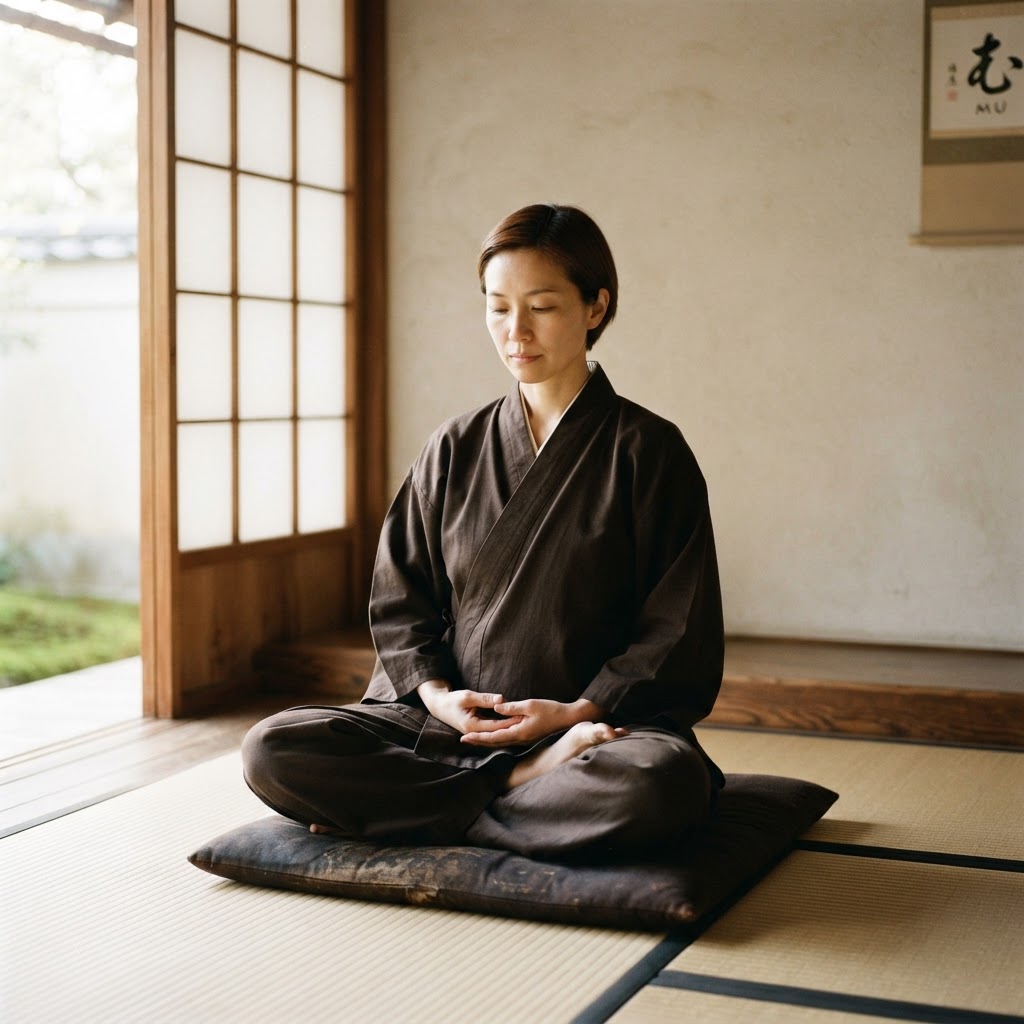
Zen Meditation (Zazen)
The core practice of Zen Buddhism — just sitting, with upright posture and open awareness, allowing thoughts to pass without engagement.
20-40 minutes
Best For
Disciplined practitionersMorning routineBuilding concentrationSpiritual seekers
Benefits
- Mental clarity and stillness
- Discipline of posture and attention
- Reduced reactivity
- Greater presence
- Spiritual insight
How It Works
The practitioner sits in a precise posture and lets thoughts arise and pass without attachment, cultivating a clear, spacious mind.
Step-by-Step Guide
- 1
Sit on a cushion in full or half lotus, or on a chair
- 2
Align ears over shoulders, shoulders over hips
- 3
Eyes half-open, gaze lowered at 45 degrees
- 4
Rest attention on the breath or simply sit in open awareness
- 5
Let thoughts arise and pass without following them
- 6
Return to posture and presence whenever distracted
Common Mistakes
- Closing eyes fully (Zen keeps them half-open)
- Slumping the posture
- Following thoughts instead of letting them pass
- Expecting dramatic experiences
History
Zen Buddhism developed in China as Chan, transmitted to Japan where it became Zen, emphasizing direct experience over scripture.
Origin
China (Chan Buddhism), refined in Japan